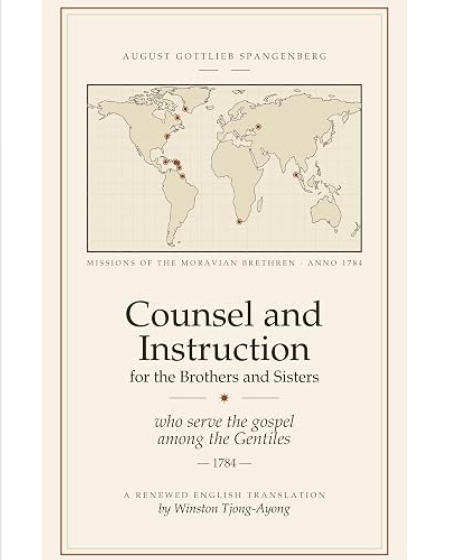
The tales of the early Moravian missionaries are among the most inspiring in church history. Spurred on by the commitment of the original OMS to take the gospel to the nations, these men and women went fearlessly and at great personal cost to all corners of the earth, even being prepared to sell themselves into slavery if that was what it took to reach enslaved people with the good news of Jesus.
When I shared some of their stories in my book “The Lord of the Ring”, I noted that Zinzendorf ‘wrote detailed instructions for missionaries, in an age when there were no books or training colleges to refer to and everything had to be learned the hard way. His instructions are simple, incisive and seem relevant even today. The experiences and practical methods of the Moravians were to become part of the foundations for virtually all the great missionary movements of the nineteenth century.’
At the time I had only read quotes from these instructions, because there wasn’t a full English version anywhere that I could access. Now Winston Tjong-Ayong has produced a fresh new translation of the whole thing into modern English. In Winston’s own words it “covers the whole life of a servant of Jesus: discerning the call, preparing the heart, learning languages, preaching Christ, baptism and communion, church discipline that restores rather than punishes, community life, caring for body and soul in hostile climates – and pressing on when the work grows heavy.”
It has a been a joy to read the hard-won advice of this first generation of a new type of missionary movement, in their own words and filled with the faith and hope that they shared. The world has changed in some important ways, but the gospel of Christ and the heart posture of believers who hear the call to share it with those who have never heard remain the same in every generation and seem to resonate immediately.
For me I feel a real sense of connection to these heroes of the faith who have inspired my OMS journey. For Winston the connection is even more personal. Among the enslaved people who came to faith through the Moravian mission in Suriname was a woman known only by her slave name, Clementina. When slavery was abolished in Suriname in 1863, she was about twenty-five years old. As a free woman, she chose a new name: Christina Clementina Rogers. She was his great-great-grandmother.
You can buy Winston’s new translation in e-book form here. I hope that you will enjoy reading it as much as I have.