When people start to explore the idea of a Rule of Life such as the OMS vow, one of their first concerns is often “does that mean there are a whole load of rules and regulations I have to follow?”
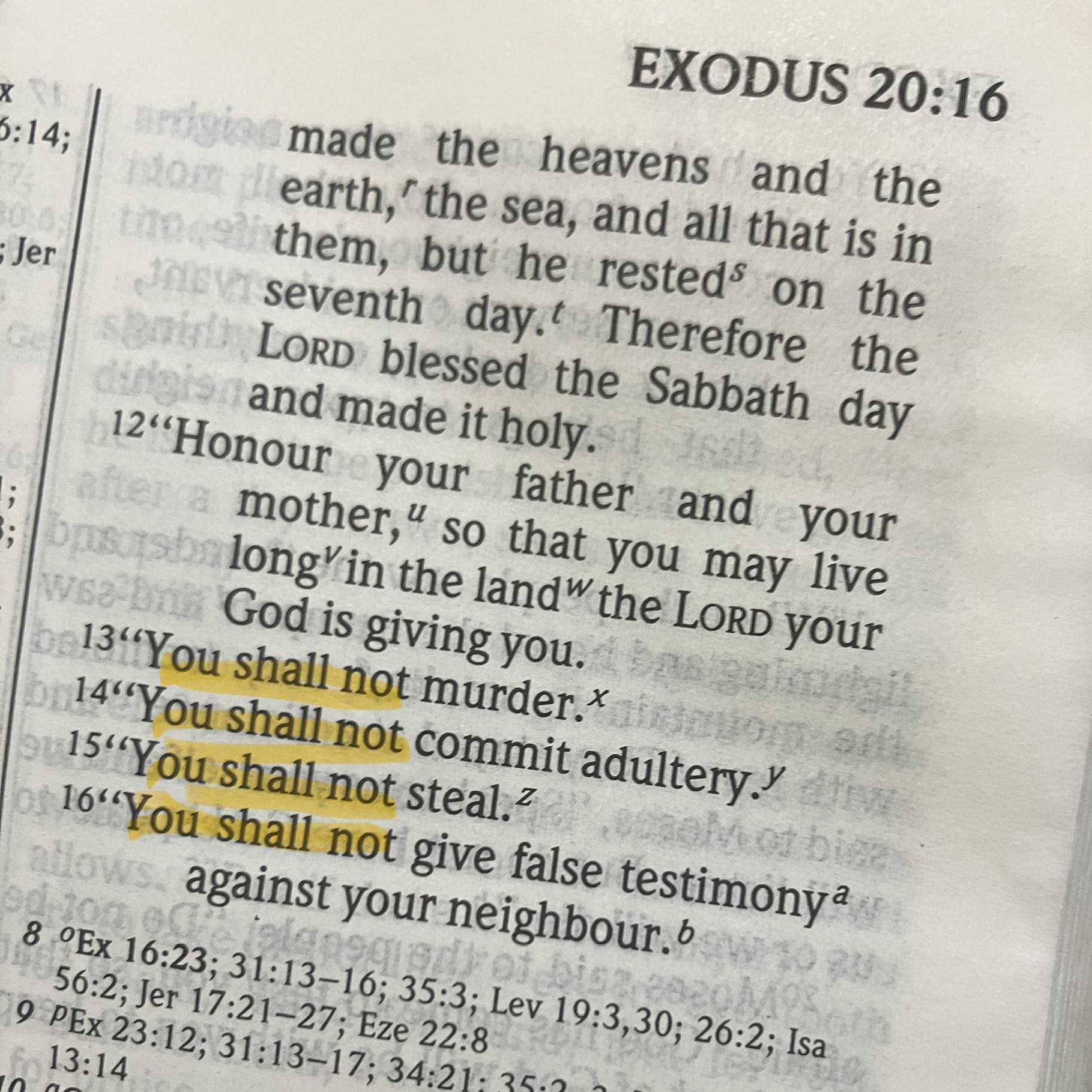
It’s a fair question. Of the ten commandments, seven start with ‘thou shalt not’ and only two take the positive form (remember the sabbath and honour your parents, if you’re interested). When faced with such a list it feels like we are setting ourselves up for failure, and Jesus acknowledges this when he accuses the pharisees of laying heavy burdens on people’s shoulders and not lifting a finger to help them (Matt 23:4). If “thou shalt not” is only a law to be followed, we are all guilty already.
But what if in Christ “thou shalt not” changes emphasis from a law to a promise? What if the new covenant is actually that foretold by Jeremiah and quoted in Hebrews 10: “I will put my law in their minds and write it on their hearts. I will be their God, and they will be my people.” If that is true, then a rule of life ceases to be a punishing obligation and becomes a life-giving way. Instead of being more work for the already-busy and more weight for the already-burdened, it is a reflection of the invitation of Jesus to learn the unforced rhythms of grace (Matt 11:29).
As OMS members, every time we renew our vows we openly acknowledge our failures and our need for forgiveness. But we also receive the astonishing covenant promise that “you really will be true” (and kind, and disciple nations) because we are chosen, loved, and filled with His Spirit.
There is an old saying that ‘before you start climbing the ladder, make sure it is leaning against the right wall’. In our case that could be ‘before you adopt a rule of life, make sure that it rests on the living promise of God, not the dead legalism of the burden-stackers’.